Wednesday, 9 January 2013

How to design an effective logo


In competitive times, businesses need to distinguish themselves from the competition. One way to do this is to utilise printing services to produce promotional material. However, promotional material is not effective unless the graphic design element is attractive and memorable. To ensure this a good logo is a necessity. A good logo is attractive, recognisable, timeless and simple. It is also scalable so that business card printing is facilitated.

1.      A Good Logo is Attractive

It is essential for a logo to be attractive. The careful choice of colour, shape and placement on advertising material should be considered when designing and producing a logo. An attractive logo will increase customer interest in the product or services being offered.

2.      A Memorable and Recognisable Logo is Important

A logo that is memorable and easily recognised will increase the profile of a company. Simplicity of design is a feature of such a logo. A complicated logo will be easily forgotten by a consumer, but a simple geometrical shape will be easily remembered. Successful logos are simple with original features, and thus memorable. They become status symbols because of their successful design.
A simple logo is also adaptable to a wide range of uses. If the company becomes involves in different activities, then the logo can be used to advertise those activities too. If the logo is too specific or complex it will not be adaptable to those uses.

3.      A Successful Logo is Scalable

Whilst aesthetic features are important, it is equally necessary for a logo to be practical. The design needs to be reproducible on a variety of promotional material. Therefore it should be easily scaled without losing the integrity of the design. For example, with business card printing, the design should be easily recognised. A professional graphic designer will be able to ensure that the logo they produce is scalable and reusable on a number of different sized objects.

4.      A Good Logo is Timeless.

An effective logo is timeless. It does not feature an object that is specific to one particular era. If it does, it easily becomes old fashioned and tired. The successful logo is one which features a design that can readily be used in the present or future.

5.      An Effective Logo is Relevant to the Industry it Represents.

An effective logo features a design that is relevant to the industry it represents. For example, a picture of a voluptuous woman would not be suitable for a toy shop logo. The logo should appropriately represent the products or services produced by the company it represents.

6.      Originality is Important.

Originality is important. It is tempting to take short cuts when designing a logo such as altering an existing image found on the web or using a template. Unfortunately such short cuts could result in long drawn out legal battles for copyright. It is important to ensure that the company logo is original and not a reused symbol from somewhere else. Using reputable design and printing services can ensure that the logo is original.
An effective logo is an asset to any company. It ensures recognition in the marketplace and differentiates the company from competition. Logos are an essential part of a professional business plan.

How to market a game app

.

Every day a new story emerges of how a lonely programmer made a small fortune with a simple game app. There are several ways of increasing your chances to become that lonely programmer. Smart marketing of a new game app can make a lucky person rich.

1.       Pricing of an app is important
Your new game app is a winner, its fast, it has cool graphics and it is easy to play and download. However, nobody will buy it. One way to increase purchasing of a new app is to smart about pricing. A common method of encouraging buyers is to have an introductory price. For example, many games give limited access to buyers for 99cents. After reaching a certain level the buyers must pay full price. This is a great way to increase word of mouth and create fans of the game. Smart introductory pricing will also influence the placing of the game on download lists. A high listing will mean more exposure of the game to potential purchasers.
2.       Social networking
Many people say that social networking is not an effective marketing tool. However other have used it productively. Like many tools, the way in which networking is used will determine success. Use social networking to link to places where screenshots of the new game are available. Ask your friends to encourage their friends to visit these places. Post reviews of the game on your social networking page, and give friends an opportunity to trial and talk about the game. Word of mouth is an important marketing tool and your friends can provide this.
3.       Micro blogging
Micro blogging can be used in a similar manner to social networking to improve exposure of a new game app. Use it to link to pages where game demos are available, also ask friends to pass on links via their own micro blogging feeds. Micro blogging combined with social networking can expose your product to a wide audience.
4.       Creating a game blog
Create a blog to discuss and inform potential consumers about the development of the app.  If you show details of the development process, empathy is created in the audience. Consumers will be more likely to spend money if they feel included in an event or development. Detailing the steps you took to produce the game will create this feeling of inclusion.
The blog can also be used to promote links to places where the game is sold and it can include special offers to readers which makes them feel even more included in the process.
5.       A website is vital
A website which showcases the game and includes screen shots and demos is a vital component of marketing a game app. In addition the website can generate income on a stand alone basis by including advertising and affiliate links. The website should include links to social networking sites, micro blogging activities and most importantly details on how to buy the app.

Creating a game app is an exciting experience, but the product needs to be professionally marketed. Using a combination of media to advertise the product will increase sales and could turn a hobby into a thriving business.

Tuesday, 8 January 2013

Colour Theory and Advertising


Colour theory has been scientifically proven to be an effective method of targeting an audience. Colour stirs emotions, and the feelings created depend on the colours used. Black for example, causes depressive reactions, whilst yellow can bring joy and happiness. The use of colour theory in printed business material can greatly enhance promotional tools.

1.      Colour theory is psychologically valid.
Colours can powerfully affect the emotions. A brightly coloured room will cause a happy feeling, whilst a darker room produces a feeling of doom and depression. In a similar manner, the use of different colours on advertising material produces emotions of happiness or sadness in a consumer. Therefore the intelligent use of colour in advertising enhances promotional material.

2.      Targeting of colour theory
The use of colour in advertising material should be targeted towards the market. An inappropriate use of colour in printed material could decrease sales. For example, the overuse of black in a toy catalogue could repel consumers. In this case the use of cheerful colours such as yellow or orange would be more market appropriate. Targeting of colour in promotional material is therefore very important when developing advertising.

Different colours have been shown to produce different emotions. Therefore the careful use of colour can produce desirable emotions towards a product or service in a consumer.

3.      Blue creates an image of reliability and stability.
The colours used in advertising can produce emotional associations with products or services. The use of blue in advertising for banks and businesses can associate the company with reliability and stability. Dark blue in particular, seems to create an impression of professionalism and solidity. Use of this colour for the promotion of financial institutions is an effective way to incorporate colour theory into advertising.

4.      Yellow means happiness
Yellow is a bright colour which produces images of sunlight and happiness. It is a good colour for companies that produce goods for younger people. The use of yellow in a catalogue for a toy company would be an effective use of colour theory. The yellow would attract younger people and their families by its promise of happiness.

The combination of yellow and green is also one which creates a positive feeling in a consumer. Many health food producers will use this combination in their promotional material. Green is   associated with nature and in combination with yellow creates happy and healthy emotions.

5.      Red is dynamic and energetic
The colour red is associated with energy and excitement. It is a useful colour for a business that sells to younger audiences. Some examples of businesses that can use this colour are computer games manufacturers or fun parks.
Colour theory can differ because of cultural connotations. For example, the colour red is a lucky colour for the Chinese. Due to this it is often used to promote gambling companies in Asian countries.

6.      Pastel pink for younger women
Pastel pink is attractive for younger women. It has associations with softness and warmth. Pastel pink is often used by make up or perfume companies to appeal to this target audience. Many older women are not attracted by pastel pink. Marketing for this audience should consider this fact.

Colour theory when used intelligently can greatly enhance the potential market for products or services. Associating a product or service with an appropriate colour will enhance its attractiveness and increase profit.

How to keep your home safe when you're on holidays


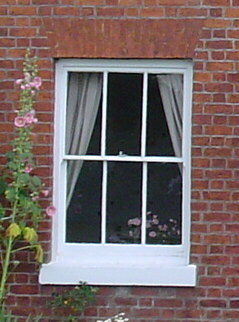
File:Window.jpg

Burglary is a crime of opportunity. It is well known that thieves look for houses with special characteristics before deciding to steal. Knowing what thieves look for can aid ordinary people in providing common sense protection for their home and contents.

What is a burglar?
A burglar is a thief, a criminal who steals from people’s homes. In most cases the thief will target homes that make the crime simple and quick. Burglars carefully target homes based on ease of access and escape.

A safe home looks occupied.
An empty house will attract a thief. If a house is empty it is less likely that the thief will get caught. An empty house also means that there is more time for the burglar to escape, fewer witnesses to the crime and less chance that the police will be called immediately.

Residents should try to avoid the appearance of an empty house. One way to do this is to leave either the TV or radio on,so noise comes from the home. It is also useful to open the curtains or blinds every morning so that the house looks occupied. Make sure that lawns and yards are always tidy so that an impression that the house is cared for is conveyed to anybody contemplating a crime.

A safe home has locked windows and doors.
Burglary is an opportunistic crime. A thief will target homes which are easy to enter and leave. In many cases of burglary, the thief has found a spare key or an unlocked window and used this as an opportunity to enter the home and steal goods.
Leaving doors unlocked and windows open, even a little, can be an invitation to a burglar. Make sure that all doors are dead locked and windows key locked. These simple precautions can prevent a disaster.

Burglars like homes that cannot be seen from the street
Thieves like to target homes that have their front doors or windows obscured by foliage, trees or bushes. The coverage means that they can enter the premises without being seen by neighbours. To prevent this, make sure that all trees and shrubs are pruned so that they do not provide easy access for criminals.
Thieves also like houses that back onto alleys or laneways. These little used streets can act as an easy escape route for somebody who wants to commit a crime.

Burglars like small portable goods
Thieves like to steal goods that are small and easy carried. This means that they can escape quickly with the stolen property and that it is easily sold for a quick profit. Sometimes burglars target homes because they see empty packaging outside the house. For example, the packaging of a new TV set. The thief sees this and realises that there is a new, valuable and portable object in the home, waiting to be stolen.

To avoid becoming a target, it is wise to discard and destroy packaging or boxes of newly purchased items.  Do not advertise your new electronic purchases to the neighbourhood.

Taking common sense precautions can lessen the possibility of theft and home invasion. Keeping the house locked, keeping in touch with neighbours and making the home seem occupied are easy ways to keep your home safe.

references:

Tim Prenzler and Michael Townsley, Preventing Burglary

How to speak Australian


Australian English has many unique features which distinguish it from its parent country, England. Like Americans, Australians have developed their own particular pronunciation and slang. For any visitor to Australia, a crash course in Australian is a necessary part of survival.

1.        Influences on Australian English
Australian English is unique in many ways. An Australian will speak more nasally than an American or Enlgish person. They will also pepper their speech with a variety of slang words and phrases that confuse the visitor. Expert linguists believe that Australian English is a combination of cockney English, Middle class English and Irish. The Irish and Cockney influence was due to the original white settlers being convicts. Whilst it is true that some cockney slang is still used in Australia, mainly in country areas, the Australian use of English has developed into a style all of its own.

2.        How to say Friend in Australian
Australian males do not have friends, they have mates. Mates are usually other men who are drinking companions, brothers in arms and close friends. The closest word in American English is ‘pal’. It does not take a great deal to turn an acquaintance into a mate. A few beers and a good chat in a pub will easily turn a stranger into a mate. Especially if the stranger is buying the beer.

3.        What is a shout?
In common parlance a shout is a scream or loud expression of shock or dismay. In Australia, a shout is a word often heard in a pub. A shout is the equivalent of a round. If an Australian says, ‘It’s your shout’, it means that you are obliged to pay for the round of drinks. Many international visitors lose money because they do not understand the meaning of the word ‘shout’.

4.        What do you call a Guy in Australia?
An upstanding man in Australia is either a mate or a bloke. A bloke is the equivalent of the American ‘guy.’ If an Australian calls somebody a ‘good bloke’, they mean that he is a man of good character.

5.        Why are Aussies, Aussies and what are Mozzies?
Australian English is much like the Australian character, casual and easy going. Australians will regularly add a ‘y’ or ‘ie’ to the end of words to shorten them. Thus an Aussie is an Australian and a Mozzie is a mosquito. Similarly, football becomes ‘footy’, and a barbeque becomes a ‘barbie’. Australians like to use shortened words to make life friendlier.

6.        Australian pronunciation.
Australian’s are casual in speech and enjoy a relaxed lifestyle. Their language and pronunciation reflect these aspects of their character. An Australian will pronounce an ‘a’ like an ‘e’ making  a word like ‘ant’  sound like ‘ent’ .This can lead to misunderstandings between native Australians and those from overseas.

 Most Australians are tolerant and will respond positively to a request to repeat information. Aussies are famous for laughing at themselves and will appreciate a good joke based upon a mutual misunderstanding of information.

What does the number of Flowers mean?


What does it mean when you receive one red rose? Or two? The number of flowers you receive sends a secret message. It’s time to decipher the numerology of flowers.


1.     A single flower is an invitation
A single rose is a lonely, beautiful object begging for a romantic embrace. A single flower means that you are the object of desire, the one true love. A single rose is an invitation for love, romance and commitment.
2.      Two flowers represent the perfect duet.
Two flowers represent the perfect couple. It is a sign of belief that you and your lover are twin souls, destined to be together till the end. To receive two roses is a signal of total devotion to the relationship.
3.      Three flowers for love
The recipient of three flowers is very fortunate. Each flower stands for a single word and the bouquet represents the one phrase that everybody wants to hear, ‘ I love you.’ To send three flowers means that you are declaring your love openly so that the world can see your devotion to your lover.
4.      Thirteen flowers for a secret
It is best to send thirteen flowers anonymously. The number thirteen is not bad luck, it is an indication that there is a secret passion waiting around the corner to grasp you in its arms and hold you. Thirteen roses are a promise that your love is waiting for the right moment to declare their feelings.
5.      Fifteen flowers for sorrow and regret.
Fifteen is an odd number, and sending fifteen flowers suggests that there has been an argument or disagreement between lovers. Sending fifteen roses is a symbolic way to apologise for the betrayal of love. It is a plea for forgiveness and an act of contrition.
6.      Twenty four flowers for the day
There are twenty four hours in a day, and twenty four flowers represent each hour. Sending twenty four flowers indicates that you are thinking of your loved one every day, every hour, every waking and sleeping minute. It is an act of devotion and passion.
7.      Fifty flowers for a long term love
Fifty flowers represent longevity and constancy. To receive fifty flowers means that the sender is prepared to spend a lifetime winning your love. It symbolises the constant growth of a truly lasting bond.
8.      One hundred flowers for a soul mate
One hundred flowers is a cry to the world,’ this is my soul mate’. It represents a love that will last a hundred years, a love that will be the subject of poetry and music. The overwhelming impression is that love is the most enduring passion in the sender’s life.
9.      One hundred and one flowers for three magic words
One hundred and one is an odd number, but in this case it is not a number of dissension. The recipient of one hundred and one flowers is about to receive even more. One hundred and one flowers represents the three words that everybody wants to hear, ‘Will you marry me?’ The sheer extravagance of the gift is a clue that there are momentous events to come.

The numerology of flowers is a special study which can reveal the true thoughts of a lover or secret admirer. The number of flowers can represent momentous events or an enduring love. Be aware of the secret language of flowers when next ordering a bouquet, or the consequences may be serious.


References
Hong Kong Florists